Now Reading: Winnie Madikizela-Mandela: A Portrait of Leadership Forged in Fire
-
01
Winnie Madikizela-Mandela: A Portrait of Leadership Forged in Fire
Winnie Madikizela-Mandela: A Portrait of Leadership Forged in Fire

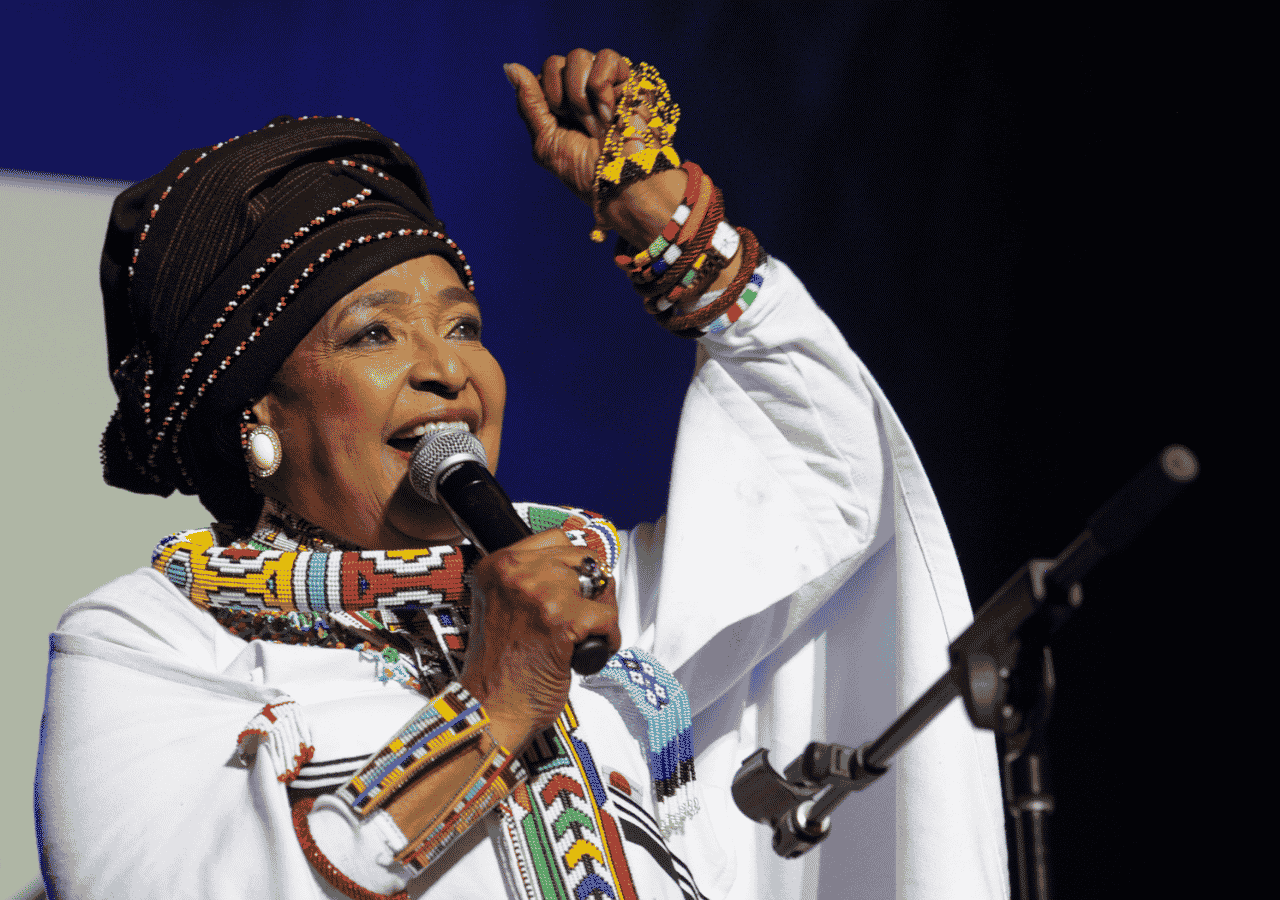
She was banned, banished, jailed, tortured and widowed by a marriage to a man behind bars, and still she refused to bow. A leadership portrait of the Mother of the Nation, the most complex and consequential woman in South Africa’s liberation story.
Leadership is easy to admire when it comes wrapped in a presidential sash and a Nobel medal. It is harder, and more instructive, when it comes in the form of a young social worker standing alone against a police state, raising two daughters under floodlights and surveillance, while the world’s most famous prisoner sits on an island and his movement looks to her to keep the flame alive.
That was the assignment history handed Nomzamo Winnie Madikizela-Mandela. She did not ask for it. She never flinched from it.
The leader who stayed
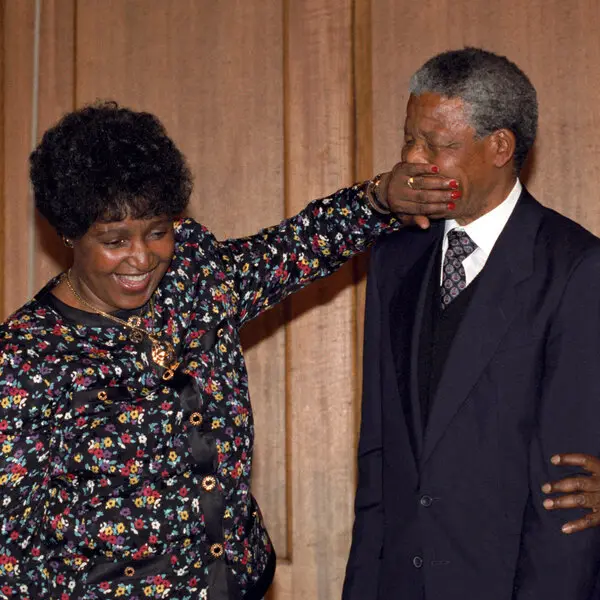
Born in 1936 in Bizana, in the rural Eastern Cape, Winnie Madikizela was a pioneer before she ever met Nelson Mandela: the first qualified Black medical social worker at Soweto’s Baragwanath Hospital, a young professional with a sharp mind and a sharper sense of injustice. When she married Mandela in 1958, she married the struggle itself, and within four years, he was gone, swallowed by Robben Island for what would become 27 years.
Here lies the first lesson of her leadership: presence. While the movement’s men were imprisoned or exiled, Winnie stayed, inside the country, inside the townships, inside the line of fire. The apartheid state understood exactly what she represented, and it threw everything at her: constant harassment, banning orders, 491 days in solitary confinement under the Terrorism Act in 1969–70, torture, and finally banishment in 1977 to Brandfort, a remote Free State town where she knew no one and barely spoke the local language.
Her response was a masterclass in defiant leadership. In Brandfort she opened a crèche, a clinic and a soup kitchen, defying the regime by simply continuing to serve. They could remove her from Soweto; they could not remove the leader from her.
The voice of the voiceless
The second lesson: courage as communication. Through the darkest decades of the 1970s and 80s, Soweto 1976, the states of emergency, the township wars, Winnie became the liberation movement’s most visible face inside South Africa and its most fearless voice. She spoke when speaking was a crime. She wore the uniform of resistance literally and figuratively, and for millions of South Africans, especially the young comrades of the townships, she was not Mandela’s wife. He was Winnie’s husband. They called her the Mother of the Nation, and she earned the title in the only currency the struggle accepted: sacrifice.
The shadow — because honest portraits require it
No truthful portrait of her leadership can end there, and Tropics does not do hagiography. The fire that forged Winnie also scarred her. The late 1980s brought the darkest chapter: the violence associated with her bodyguards, the Mandela United Football Club, and the death of 14-year-old activist Stompie Seipei, for whose kidnapping she was convicted in 1991. The Truth and Reconciliation Commission later found her implicated in grave abuses, and Archbishop Desmond Tutu, who revered her, pleaded with her publicly to say sorry. A fraud conviction followed in 2003. Her marriage to Mandela ended; her relationship with the post-apartheid establishment remained turbulent until her death in April 2018.
These are not footnotes. They are the cost ledger of a leadership formed under siege, a reminder that the same unbreakability that resists tyranny can, untempered, break other things. Leaders across Africa would do well to study both columns of her ledger: what oppression does to those who fight it, and what power demands of those who survive it.
What she teaches Africa’s leaders today
Strip away the mythology and the controversy, and Winnie Madikizela-Mandela’s leadership lessons remain piercingly relevant for a continent still producing freedom fighters of every kind, political, economic, creative.
She teaches that leadership is proximity: she led from the township, not the conference hall. That institutions can be improvised: denied every platform, she built crèches and clinics out of banishment itself. That symbolism is strategy: she understood, decades before the age of the personal brand, that a leader’s image is a weapon, and she wielded hers with devastating effect. And that women lead under a double burden: vilified for a militancy that, in men, was celebrated as heroism, she carried the struggle and the scrutiny simultaneously, and never surrendered to either.
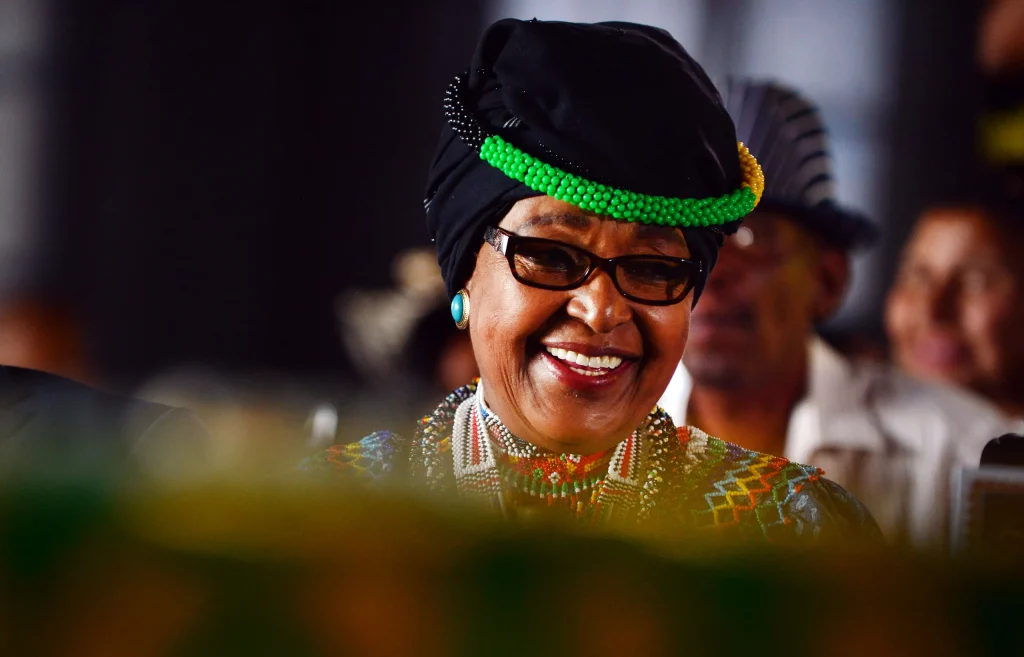
When she died, hundreds of thousands filled Orlando Stadium, and a younger generation, particularly young African women, claimed her anew, insisting that history had judged her by standards it never applied to the men around her. Her rehabilitation in popular memory is itself a final lesson: leadership is ultimately judged not only by commissions and courts, but by the people one refused to abandon.
She was imperfect, immense and unbowed. The country she fought for buried her as what she always was, undefeated.
© 2026 Tropics Media Group. Original content written by Venicia Guinot and distributed by Tropics PressRoom. All Rights Reserved.


Stay Informed With the Latest & Most Important News
Previous Post
Next Post




Advertisement